Game development is no longer just about coding, art, and sound. Today, the gaming industry is undergoing a profound transformation thanks to automation. From AI-powered tools that help streamline workflows to automated testing and procedural generation, automation is reshaping how game studios operate and innovate.
What Is Automation in Game Studios?
In the context of game development, automation refers to the use of software and tools to automate repetitive tasks and streamline complex processes. Automation tools are designed to handle tasks that would otherwise require manual input, freeing up developers to focus on more creative aspects of game design.
For instance, AI-driven tools can automatically generate game assets, optimize code, or even help with playtesting. Automated testing is another common application, where AI bots simulate player interactions to detect bugs and ensure smoother gameplay.
With automation in place, studios can produce high-quality games faster and with less effort, which is a huge win in an industry driven by deadlines and competition.
Key Areas Where Automation Is Revolutionizing Game Studios

Automation is making its mark in several areas of game development. Let’s take a look at the most impactful ways it’s being used:
1. Automated Testing and Quality Assurance
One of the most time-consuming aspects of game development is quality assurance (QA). Traditionally, testing was done manually, with QA testers playing through levels repeatedly to find bugs. This process could take months and often led to delays.
With automated testing tools, game studios can now run simulations to detect bugs and issues within minutes. These tools can simulate thousands of game scenarios, making sure the game performs well in a variety of environments and situations. Popular tools like SikuliX and TestComplete are now commonly used in studios to automate functional testing, regression testing, and even performance testing.
For example, when testing a racing game, the AI can simulate countless car maneuvers and environmental conditions, checking for bugs in both graphics and mechanics. This significantly speeds up the development cycle and improves the game’s quality by catching issues early.
2. Procedural Content Generation (PCG)
Creating massive game worlds can be a daunting task for developers. Whether it’s a sprawling open-world game or a procedurally generated dungeon, creating content by hand can take years. Procedural content generation (PCG), powered by AI, is changing that.
PCG algorithms allow studios to generate vast game environments automatically, ensuring that no two playthroughs are the same. This means game developers can create infinite worlds with fewer resources. Games like Minecraft, No Man’s Sky, and Terraria have successfully used procedural generation to build complex, dynamic environments without manually designing every element.
In No Man’s Sky, for instance, the game uses an algorithm to generate entire planets, ecosystems, and alien lifeforms, giving players a unique experience with each new planet they explore. Automation enables this on a massive scale, saving the developers months of manual work.
3. AI-Powered Asset Generation
In any game, the creation of assets such as textures, models, animations, and audio is an essential part of the development process. Historically, artists would spend countless hours designing assets by hand. But now, AI tools like Artbreeder and DeepArt are being used to automate the creation of art assets.
These AI tools can generate a wide variety of character designs, textures, and backgrounds based on minimal input. Artists can tweak the results, but the AI does much of the heavy lifting, saving both time and resources.
For example, AI can generate variations of a character’s outfit, facial expressions, or even entire environments that match the game’s aesthetic. This allows studios to create rich, varied game worlds with less manual work, reducing costs while enhancing visual quality.
4. AI for Dynamic Difficulty Adjustment (DDA)
As gaming becomes more sophisticated, so does the experience for players. One aspect that has benefited from automation is dynamic difficulty adjustment (DDA). This system automatically alters the game’s difficulty based on the player’s skill level.
For example, if a player is breezing through a level with ease, the game will increase the difficulty by spawning tougher enemies or presenting more complex puzzles. Conversely, if a player is struggling, the game will offer more forgiving mechanics to prevent frustration.
Many modern games, such as Left 4 Dead and Resident Evil 4, use DDA powered by AI to create a more personalized and engaging gaming experience. Automation here ensures that players are always challenged, but not overwhelmed, making for a more enjoyable experience overall.
5. Automating Localization and Translation
When studios release games globally, the process of localization and translation can be a monumental task. Traditionally, each piece of text, dialogue, and visual element would need to be manually translated into multiple languages. This process could take months, especially with large games.
With AI-powered translation tools like DeepL and Google Translate, studios can now automate much of the localization process. These tools can translate text in real-time and even adjust for cultural nuances, reducing both time and cost while maintaining the game’s integrity in different markets.
For example, AI can help localize in-game dialogues, item descriptions, and UI elements, ensuring a faster and more accurate global release.
Benefits of Automation in Gaming Studios
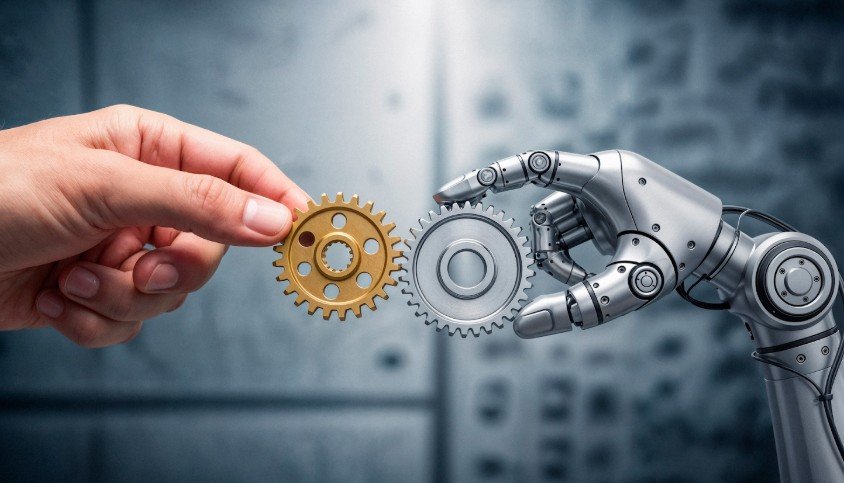
Automation has a range of benefits that make it an essential tool in modern game development.
1. Increased Efficiency and Speed
Automation helps game studios accelerate production by streamlining tasks like testing, asset generation, and level design. What would normally take months can now be completed in days, enabling studios to meet tight deadlines.
2. Cost-Effective Development
By automating time-consuming tasks, studios can reduce their need for large teams, thereby lowering overall production costs. AI-powered tools can replace manual labor in asset creation, QA, and testing, giving developers more room in their budgets for creativity.
3. Improved Quality Control
Automated testing ensures that bugs and glitches are caught early in development, leading to better quality games. AI can also analyze data from thousands of players to identify potential issues that human testers may overlook.
4. More Immersive Gameplay
With AI handling procedural generation, testing, and asset creation, game developers can focus more on creating rich, engaging storylines and innovative gameplay mechanics. The result is a more immersive and polished final product.
Frequently Asked Questions (FAQs)
1. What tasks can be automated in a game studio?
In a game studio, automation can handle tasks like automated testing, asset generation, procedural world generation, localization, and difficulty adjustment.
2. How does automated testing improve game development?
Automated testing allows for faster bug detection, running tests on multiple game scenarios simultaneously, which would be too time-consuming for human testers. This leads to better game performance and fewer bugs upon release.
3. Can AI create art for video games?
Yes, AI can generate art assets such as character designs, textures, and backgrounds. Tools like Artbreeder and DeepArt help automate the art creation process, allowing for diverse and dynamic assets.
4. How does procedural content generation work?
Procedural content generation uses AI algorithms to automatically generate large-scale content, such as game environments, levels, and quests. This allows developers to create vast, randomized worlds without manual design.
Final Words
The integration of automation in game studios is transforming the gaming industry, making development faster, more cost-effective, and increasingly sophisticated. As AI tools continue to evolve, their ability to streamline workflows, enhance quality, and create dynamic gameplay experiences will only improve.
Automation isn’t just a tool for efficiency, it’s a game-changer that allows developers to push the boundaries of what’s possible in video games.

Ryo Nakamura
View More PostsRyo Nakamura covers gaming news, updates, and industry trends. His writing keeps the community informed about new releases, patches, and competitive shifts, offering clear context and insight into how changes impact gameplay and the broader gaming landscape.