Children’s mental and emotional well-being is just as important as their physical health. During the early years, they learn how to understand emotions, build relationships, and respond to life’s challenges. Parents, caregivers, and educators all contribute to creating a nurturing environment where children feel safe, valued, and confident. By encouraging healthy emotional development from the start, families can help children build resilience that benefits them throughout life.
Why Mental and Emotional Well-Being Matters in Early Childhood
Mental and emotional well-being forms the foundation for a child’s overall development. It influences how children think, communicate, solve problems, and interact with others. When children feel emotionally secure, they are more likely to develop confidence, curiosity, and a willingness to explore new experiences.
Early childhood is a critical stage for developing emotional awareness. During this time, children begin identifying their feelings, recognizing emotions in others, and learning appropriate ways to express themselves. These abilities gradually shape their communication skills, friendships, and ability to manage challenges.
Positive emotional health also supports cognitive development. Children who feel safe and supported often concentrate better during learning activities and adapt more easily to new environments. They are generally more open to trying new experiences because they trust that caring adults are available to guide them.
Strong emotional well-being can also reduce the effects of everyday stress. While children naturally encounter frustrations and disappointments, having reliable support helps them recover more quickly and continue learning from those experiences.
Parents and caregivers play an essential role by providing encouragement, consistency, and unconditional support throughout every stage of development.
Creating a Safe and Supportive Environment

A child’s surroundings significantly influence emotional health. Feeling physically and emotionally safe allows children to develop confidence while exploring the world around them.
One of the most effective ways to create security is through consistent routines. Regular schedules for meals, sleep, play, and learning help children know what to expect each day. This also helps parents feel less overwhelmed. Predictability reduces anxiety while fostering a sense of stability.
Open communication is equally important. Children should feel comfortable sharing both positive and difficult emotions without fear of criticism or punishment. Caregivers who actively listen demonstrate that every feeling deserves acknowledgment, even when certain behaviors require guidance.
Positive reinforcement strengthens emotional growth. Praising children’s efforts, perseverance, kindness, and problem-solving abilities encourages healthy self-esteem. Instead of focusing only on achievements, recognizing progress teaches children that learning and growth are ongoing processes.
Families can also support emotional well-being by spending quality time together. Reading stories, playing games, preparing meals, or simply talking about the day creates meaningful opportunities for connection. These shared experiences strengthen trust while helping children feel loved and valued.
Calm and respectful communication among adults also serves as a powerful example. Children observe how caregivers manage disagreements, express emotions, and solve problems, often adopting similar behaviors themselves.
Helping Children Understand and Express Their Emotions
Children are not born knowing how to manage emotions. Emotional regulation develops gradually through patient guidance and repeated practice.
The first step is helping children identify their feelings. Naming emotions such as happiness, sadness, frustration, excitement, or fear gives children the vocabulary needed to communicate their experiences. Simple conversations about daily events provide natural opportunities to practice recognizing emotions.
Caregivers should validate children’s feelings without immediately dismissing or minimizing them. Acknowledging emotions teaches children that all feelings are acceptable, even though some behaviors may require correction. This approach builds emotional intelligence while strengthening trust between children and adults.
Teaching healthy coping strategies is equally valuable. Children can learn to take deep breaths, count slowly, ask for help, or spend a few quiet moments calming down when emotions become overwhelming. Practicing these techniques during calm moments makes them easier to use during stressful situations.
Creative activities also provide excellent emotional outlets. Drawing, storytelling, music, pretend play, and crafts allow children to express feelings they may not yet have the words to explain.
Many families also benefit from enrolling children in a supportive daycare in Taylorsville, where caring educators encourage positive social interactions, emotional expression, and age-appropriate conflict resolution throughout the day.
Encouraging Positive Relationships and Social Skills
Healthy relationships are closely connected to emotional well-being. As children interact with family members, friends, and educators, they gradually develop communication skills, empathy, cooperation, and confidence.
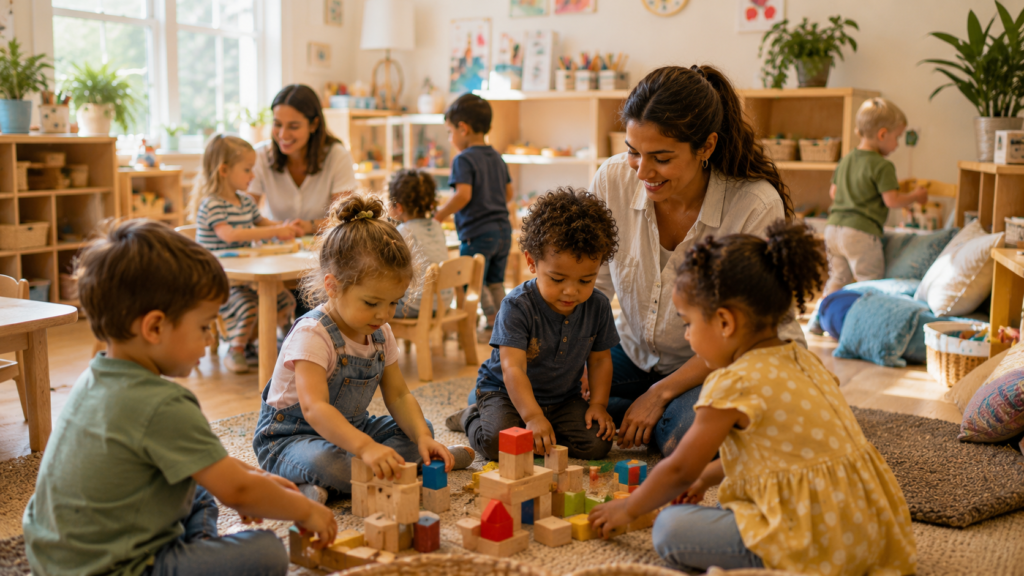
Play is one of the most effective ways children learn social skills. Whether participating in group games or imaginative activities, they practice taking turns, sharing, negotiating, and resolving disagreements. These experiences help children understand different perspectives while building meaningful friendships.
Adults can further support social development by modeling respectful communication. Using kind language, listening attentively, and treating others with patience demonstrate behaviors that children naturally imitate.
Encouraging teamwork also promotes emotional growth. Household responsibilities, collaborative games, and shared projects teach children the value of cooperation while reinforcing a sense of belonging.
Conflict should be viewed as an opportunity for learning rather than punishment. Guiding children through disagreements by asking questions and encouraging problem-solving helps them build confidence in resolving future challenges independently.
Parents should also recognize that every child develops social skills at their own pace. Gentle encouragement and consistent opportunities for interaction are generally more effective than forcing participation before children feel comfortable.
Building Emotional Resilience Through Everyday Experiences
Resilience is the ability to recover from setbacks, adapt to change, and continue moving forward after challenges. Like many important life skills, resilience develops gradually through everyday experiences.
Children benefit when adults allow them to face age-appropriate challenges instead of solving every problem immediately. Completing a difficult puzzle, learning a new skill, or working through small disappointments teaches perseverance and confidence.
Mistakes should be presented as valuable learning opportunities rather than failures. When caregivers respond calmly to errors, children become more willing to try new things without fearing perfection.
Setting realistic expectations also supports resilience. Children need encouragement that matches their developmental stage, allowing them to experience success while gradually building independence.
Gratitude and optimism can further strengthen emotional health. Discussing positive moments from the day helps children appreciate small successes while maintaining a balanced perspective during difficult situations.
Maintaining healthy daily habits also contributes to emotional resilience. Nutritious meals, regular physical activity, quality sleep, and opportunities for outdoor play all support mood regulation, concentration, and overall mental wellness.
Perhaps most importantly, children need to know they have dependable adults who believe in them. Feeling supported gives them the confidence to explore, learn, and recover from life’s inevitable challenges.
Conclusion
Supporting children’s mental and emotional well-being requires patience, consistency, and meaningful connections. By creating a safe environment, encouraging emotional expression, fostering healthy relationships, and teaching resilience, parents and caregivers help children develop the confidence to navigate life’s experiences.
These everyday efforts build a strong emotional foundation that supports learning, healthy relationships, and lifelong well-being as children continue to grow.

Ryo Nakamura
View More PostsRyo Nakamura covers gaming news, updates, and industry trends. His writing keeps the community informed about new releases, patches, and competitive shifts, offering clear context and insight into how changes impact gameplay and the broader gaming landscape.