Walk into any archery shop and the vane selection alone is enough to make a first-timer’s head spin. Short, tall, straight, offset, helical, plastic, rubber, feather. Every option claims to fly better, stabilize faster, or shoot quieter through a rest. Most of them work reasonably well.
A few of them work noticeably better for specific setups and shooting styles. The difference isn’t marketing. It’s physics.
Why Fletching Matters More Than Most Archers Think
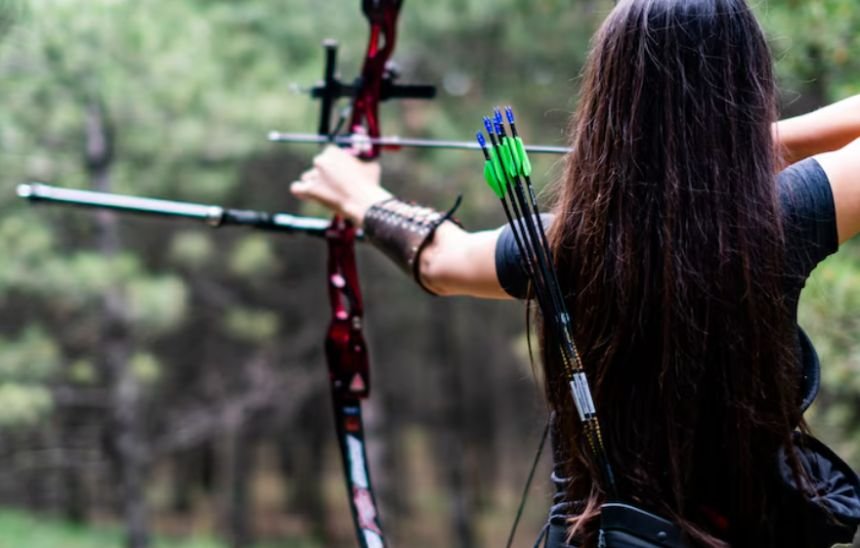
Vanes don’t just keep an arrow from tumbling. They actively steer it. From the moment an arrow clears the bow, the fletching is working against rotation, drag, and any wobble introduced by the paradox.
How quickly and completely they do that job determines how stable the arrow is at 20 yards, 40 yards, and beyond, and stability at distance is what puts a broadhead exactly where it was aimed.
The problem is that most archers tune their rest, their d-loop, their draw length, and their peep sight, and then slap on whatever vanes came with their arrows.
The fletching gets treated as a cosmetic choice rather than a ballistic one, which leaves performance on the table that was already paid for.
Profile Height and Its Effect on Drag and Stability

Vane height is the most visible variable and one of the most consequential. Taller vanes create more surface area, which creates more drag, which produces faster stabilization. That sounds straightforwardly better until you factor in speed.
Higher drag means more speed lost over distance, which matters in competitions or in hunting scenarios where a flatter trajectory is valuable. It also means louder arrow flight through some drop-away rests, since taller vanes are more likely to make audible contact.
For hunters shooting at practical distances with broadheads, the faster stabilization of a taller vane frequently outweighs the minor speed cost. For target archers maximizing downrange velocity, a lower-profile vane is usually the better call.
The Role of Offset and Helical in Stabilization
Straight vanes produce the least drag and the least spin. They’re fine for short-distance field points, where stabilization happens quickly regardless.
Push out to hunting distances with a fixed-blade broadhead and straight vanes tend to show their limits, since the broadhead blades act as a wind vane and fight any attempt to maintain a straight trajectory without sufficient spin to resist the torque.
Offset fletching introduces a slight angle that causes the arrow to rotate in flight. Helical goes further, curving the vane itself around the arrow shaft to produce more aggressive spin.
More spin means faster broadhead stabilization and greater resistance to wind drift, both of which matter significantly at distances beyond 40 yards.
The trade-off is a modest speed reduction and slightly more demanding clearance requirements through the arrow rest, which is why rest setup and vane choice should always be considered together rather than independently.
Running helical fletching through a containment rest that wasn’t designed for it is a fast way to introduce the kind of inconsistency that looks like a bow problem but is actually a clearance problem.
Material: Plastic vs. Rubber vs. Feather
The material a vane is made from affects stiffness, durability, adhesion, and how the vane performs after getting wet.
Plastic Vanes
Plastic vanes are the standard for most modern setups. They’re durable, consistent in profile, bond well with the right adhesive, and handle moisture without warping.
They’re also the most forgiving across different shooting styles and setups, which is part of why they dominate the market. The one variable worth watching with plastic vanes is adhesion prep. A shaft that isn’t cleaned properly before fletching will peel in the field at exactly the wrong moment.
Rubber Vanes
Rubber vanes are softer and more flexible, which makes them quieter through drop-away rests and more forgiving of contact with arrow rest launchers during the shot. Some hunters prefer them specifically for this reason, particularly when shooting through tight clearance situations with larger broadheads.
Feathers
Traditional archers and some recurve shooters still prefer natural feathers, which collapse on contact with the shelf or rest rather than deflecting the arrow as a stiffer vane would. For modern compound setups with drop-away rests, feathers offer little practical advantage and tend to lose performance in wet conditions.
Matching Vane Choice to Broadhead Type
This is where a lot of setups go sideways. A three-blade fixed broadhead creates far more drag and torque in flight than a field point, and it demands a fletching configuration that can overcome that influence quickly.
A short, low-profile vane that’s perfectly adequate for field points will often struggle to stabilize a large fixed-blade broadhead before it reaches the target, particularly at longer distances.
Hunters who shoot the best arrow vanes for their broadhead type, matched to their specific draw weight and arrow spine, tend to notice the difference immediately during broadhead tuning.
The arrows group tighter, the flight is more consistent, and the broadhead stays on its intended path instead of wanting to plane left or right based on blade orientation.
Mechanical broadheads are more forgiving here since the closed profile during flight behaves more like a field point, which is one reason they’re often recommended alongside lower-profile vane setups for speed-oriented builds.
Conclusion
Fletching choice is one of the most impactful and least appreciated variables in a bowhunting setup. Match vane height and offset to your broadhead type and shooting distance, consider the material relative to your rest and hunting conditions, and treat the decision as seriously as you’d treat selecting the broadhead itself.

Ryo Nakamura
View More PostsRyo Nakamura covers gaming news, updates, and industry trends. His writing keeps the community informed about new releases, patches, and competitive shifts, offering clear context and insight into how changes impact gameplay and the broader gaming landscape.